How your power works today — and how solar changes it.

Learn how electricity gets to your home now, what changes when solar is added, and why so many homeowners are using solar to create more control, more predictability, and better long-term energy economics.

Start with the current system

Before solar, your home depends almost entirely on the utility grid.

Most homeowners do not think about their electricity until the bill shows up. But the current setup is simple: power is generated somewhere else, sent across the grid, delivered to your home, and billed back to you every month.

That means you are not just paying for raw electricity. You are also paying for delivery, fuel adjustments, storm-related costs, fees, and other utility charges that you do not control.

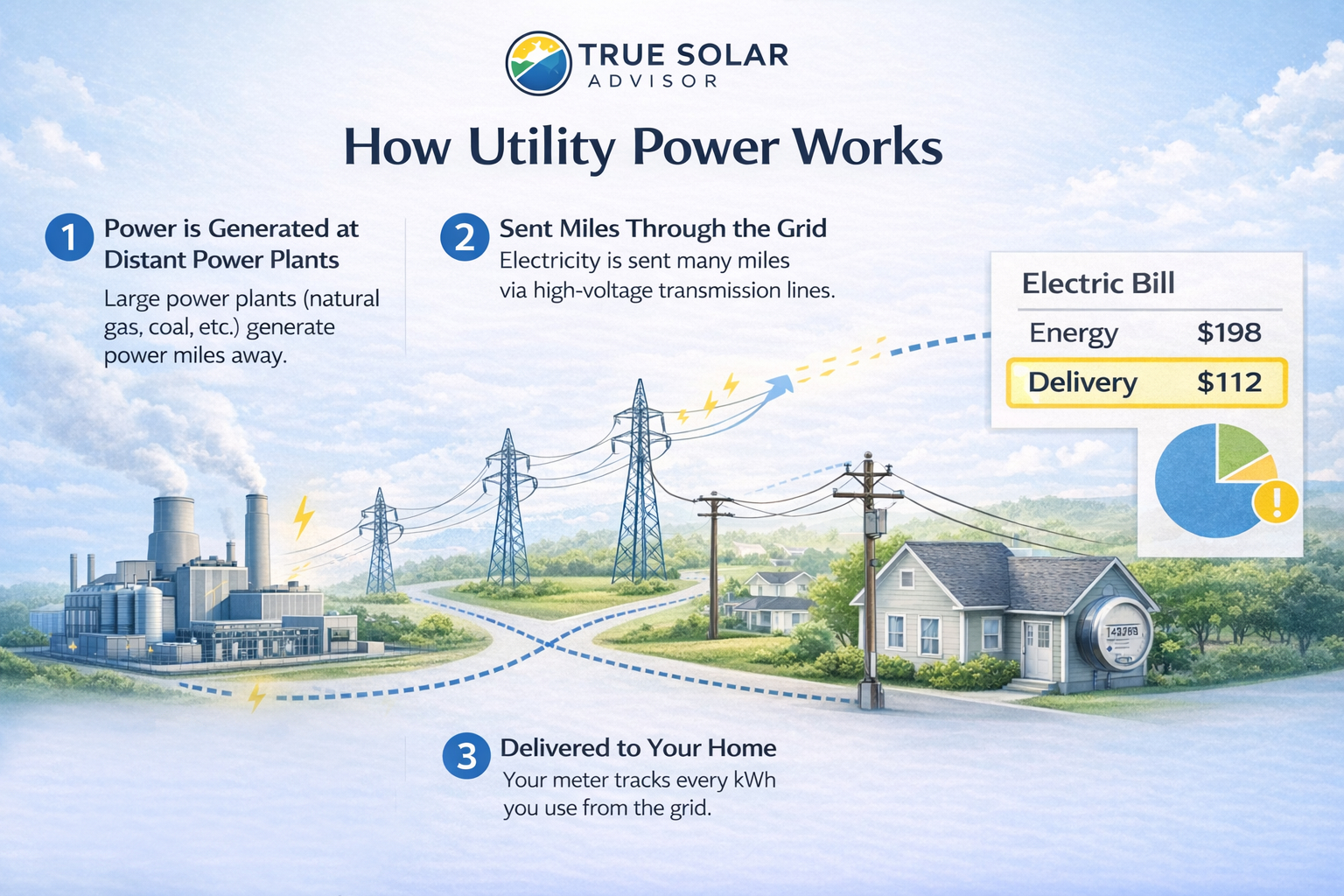
Diagram showing how utility power is generated at distant power plants, sent through the grid, and delivered to a home with an electric bill.

How utility power works today

Power is generated at distant plants, moved through transmission infrastructure, then delivered to your home through the local grid. Your meter tracks what you use, and your bill reflects both energy and delivery-related charges.
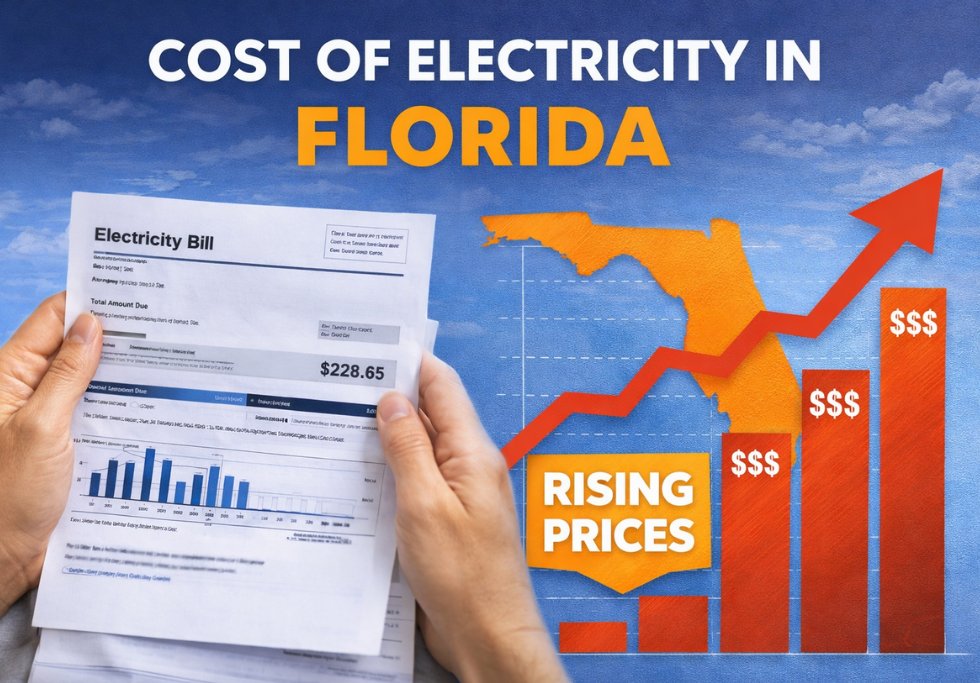
Graphic showing the rising cost of electricity in Florida.
📍

Why the traditional setup feels expensive

When all of your power is coming from the utility, you are fully exposed to whatever happens next: rate hikes, storm-recovery charges, fuel cost changes, and the added strain on the grid as more homes and demand continue to grow — especially in a fast-growing state like Florida.

The simple utility flow

Without solar, the process is basically this.

Understanding the current flow makes it much easier to understand what solar actually changes.

1

Power is generated somewhere else

Large utility plants generate the electricity, often far away from your home, using whatever fuel mix the utility is currently relying on.

2

It travels through the grid

The electricity moves through transmission and distribution infrastructure before it ever reaches your property.

3

You pay whatever the bill becomes

Your home uses the power, the meter records it, and the utility bills you based on both usage and all the extra costs built into the system.

What solar changes

Solar changes where your power comes from first.

It does not eliminate the need for the grid in every situation. What it does is change the order of operations: your home can use power produced on your roof first, and the grid becomes a backup or balancing source rather than your only source.

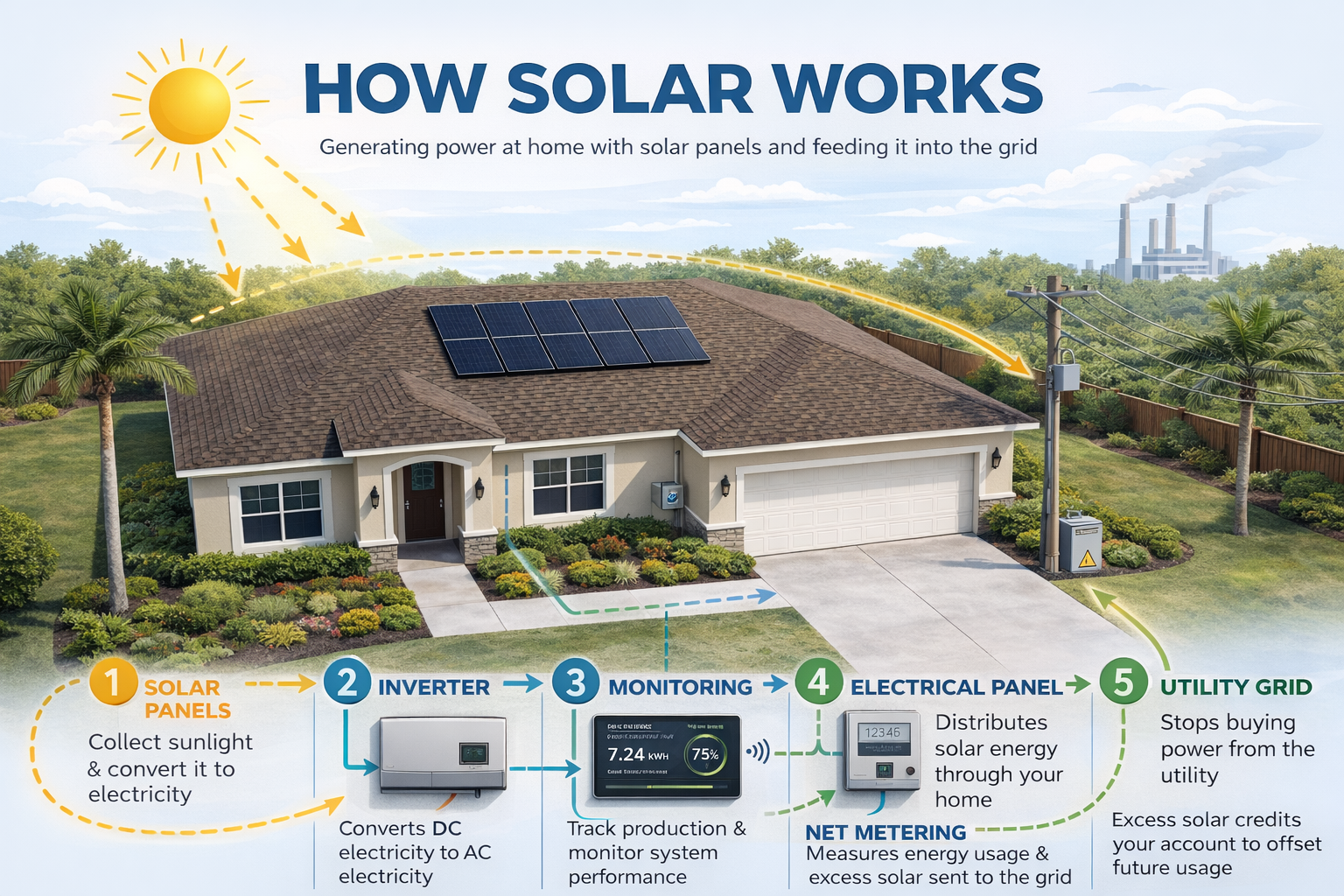
Diagram showing solar production from panels through the inverter and into the home and utility grid.
☀️

How solar works at home

Solar panels produce electricity from sunlight. The inverter converts that power into usable electricity for the home, your panel distributes it through the house, and any excess can flow back to the grid for credits depending on the utility setup.

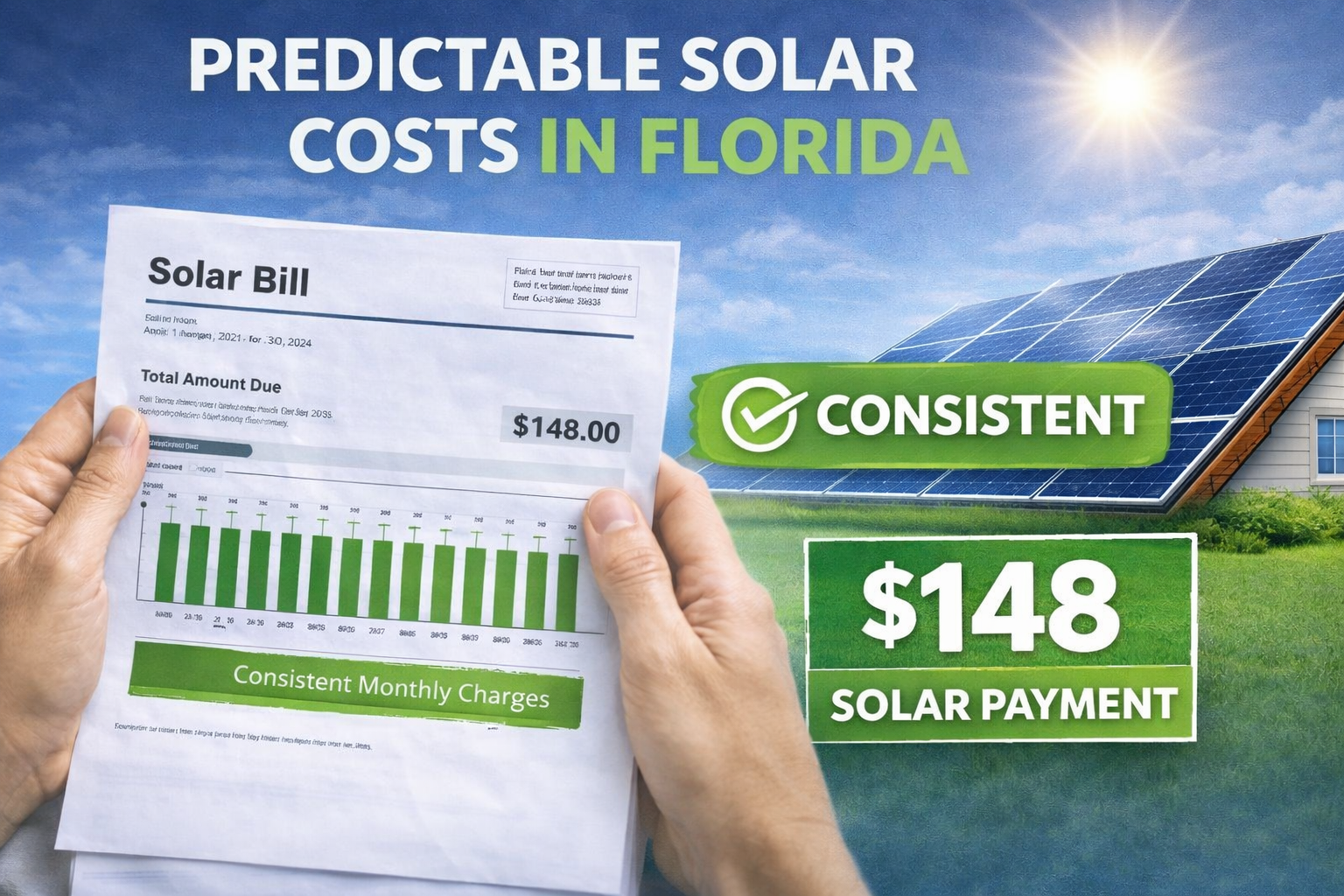
Graphic showing more predictable solar costs in Florida.
🔄

The key shift

Instead of buying all of your electricity from the utility every month, you are now ideally, producing all of it yourself. In some cases you can't get 100% offset but some is always better than none. That is the real shift — and it is what creates the savings, stability, and control homeowners care about.

Before vs after

Solar usually makes the most sense when it improves how you pay for power.

This is the practical comparison most homeowners care about: what the old setup looks like versus what the solar version of that setup can look like.

Before solar

You are fully dependent on the utility and fully exposed to future rate increases.

Primary source of powerUtility grid
Monthly cost patternCan rise unpredictably
Storm / grid exposureFully exposed
Typical homeowner feelingReactive
Main downsideNo control

With solar

Your home can produce power first, and the cost structure often becomes lower or at least more predictable.

Primary source of powerSolar first, grid second
Monthly cost patternLower or more stable
Optional backup pathBattery storage available
Typical homeowner feelingMore in control
Main upsideMore predictability
Why rates keep rising

Florida homeowners are not imagining it — electricity keeps getting more expensive.

The exact reasons vary by utility and by year, but the pattern is familiar: storm recovery, hurricane hardening, grid upgrades, fuel costs, and increased demand all continue to push rates higher over time.

Storm and hurricane-related costsUtilities recover money spent on storm response, repairs, and future hardening projects through the rate base and customer bills.
Fuel and energy cost pressureEven when your own usage does not change much, broader energy market changes can still affect what the utility charges.
More homes, more grid demandAs population grows and more homes are built, utilities keep investing in infrastructure to keep up with the added load.
Long-term upward pressureThe important point for homeowners is simple: utility power rarely gets more predictable over time, and that is exactly why solar keeps getting attention.
Lease vs ownership

There are two main ways homeowners go solar.

The right path is not the same for every homeowner. Some want ownership and long-term asset value. Others care more about immediate savings, lower friction, and not taking on another loan.

🧭

Why this matters

Two homeowners can look at the same roof and the same bill and still choose different solar paths based on their goals, timeline, and comfort with financing.

Ownership / cash or loan

This path is usually about long-term ownership, system value, and eventually reaching the point where the system has paid for itself.

Barrier to entryHigher
Credit processUsually stricter / hard credit check
Who owns the systemYou do
Main tradeoffHigher upfront commitment
Main upsideLong-term ownership

Lease / power-style option

This path has become much more popular for homeowners who want immediate savings, a lower barrier to entry, and no loan attached to the system.

Barrier to entryLower
Credit processUsually soft check only
Who owns the systemThird-party provider
Main tradeoffNo system ownership
Main upsideImmediate savings potential
Escalators and predictability

Many lease-style options trade rate uncertainty for a more defined path.

Lease and power-style options usually come with a clear pricing structure from the beginning. Some offer no annual escalator at all, while others may increase at a modest preset rate such as 0.99%, 1.99%, or 2.99% per year. That does not mean every option is best for every homeowner — but it does mean the increase path is known instead of left entirely up to the utility.

0% escalatorHigher starting payment sometimes, but maximum long-term predictability.
Low escalator optionsLower starting payment in some cases, with a defined increase path you can actually plan around.
Battery backup can add another layer of valueFor homeowners concerned about outages, batteries can help keep essential circuits running and recharge during the day when solar production is available.
The key benefit is clarityThe right solar path is not just about the lowest number today. It is about the best overall fit for savings, predictability, and homeowner goals.

So... does this make sense for your home?

Now that you understand how utility power works, how solar changes the flow, and why different program paths exist, the next step is seeing whether your roof, shade, bill, and goals line up well enough to move forward.

See if you qualify